 English
 Français

Airflow is the input growers notice last, because it never sets off an alarm. Your controller will tell you the room is 76°F at 55% RH and leave it at that.
The plants tell you a different story, but they tell it in symptoms that are easy to blame on something else. Here are seven of them.
The same corner is always the problem
One end of the room runs warmer or more humid than the rest, and it has done so since the day you commissioned it. Staff have stopped mentioning it.
A persistent hot or humid pocket is almost never an HVAC capacity issue. It is a distribution issue: conditioned air is being produced but not delivered there.
What to check: Whether that zone is at the far end of a duct run, or behind an obstruction like a rack upright, a light bar, or a fertigation line.
Mildew keeps coming back to the same spot
You treat it, it clears, and six weeks later it returns within a few feet of where it was before.
Recurring localized disease pressure follows stagnant air. Where velocity is low, transpired moisture accumulates against leaf tissue instead of being carried away, and it sits there for hours a day.
What to check: Air velocity at canopy height in that specific spot, not the room average. The room average will look fine.
Tipburn on the newest growth
Common in leafy greens and vertical farms, and usually blamed on the feed. In controlled environments it is more often a local calcium deficiency caused by thick boundary layers around the leaf, not a shortage of calcium in the tank.
Calcium moves up the plant by transpirational pull. When air movement is too weak to drive transpiration, calcium never reaches the growing tip. Adding more calcium does not fix a transport problem.
What to check: Whether tipburn maps to specific trays or tiers rather than appearing evenly across the crop.
Top and bottom tiers do not match
Same genetics, same feed, same light recipe, different results by rack level. Upper tiers finish ahead, or one tier consistently lags.
Stacked systems are the hardest air distribution problem in the building. Overhead supply naturally favors the top, and each tier of canopy blocks what would have reached the one below.
What to check: Velocity at each tier separately. Treat a five-tier rack as five rooms, because that is how the plants experience it.
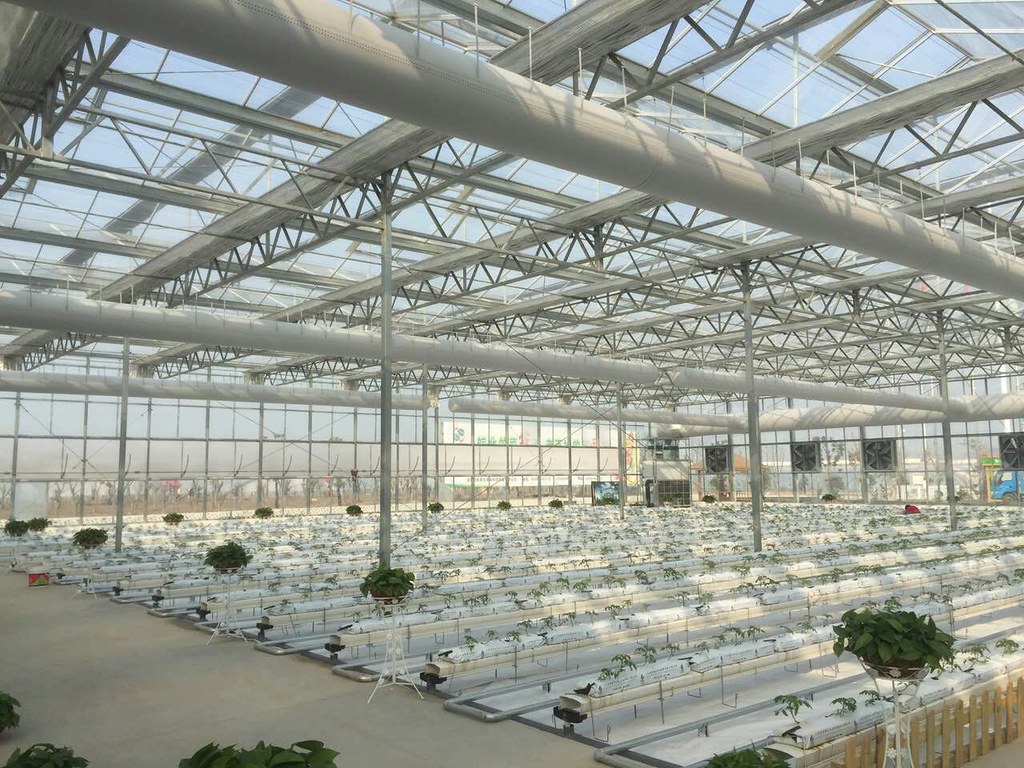
Your VPD is perfect but the plants disagree
The controller holds setpoint all cycle. Growth still looks stressed, or transpiration is lower than the irrigation data suggests it should be.
VPD at the leaf depends on leaf surface temperature, which depends partly on the air velocity around the leaf. Your sensor measures the air in the room. Without movement to disturb it, a leaf can sit in its own humid microclimate the sensor never sees.
What to check: Whether room VPD and plant behavior diverge more in the densest parts of the canopy.
You keep adding circulation fans
There are more fans in the room now than the design called for, and each one was added to solve a specific complaint.
Fans work locally, but each one is a band-aid on a distribution failure, and in a sealed room they reject their full electrical draw back into the space as heat that your cooling system then has to remove. They also create new gradients: over-velocity near the fan, a shadow behind whatever it is blowing past.
What to check: Count them. If the number has grown every season, the supply air is not reaching the canopy on its own.
CO₂ enrichment is not paying for itself
You are dosing to 1,000 ppm and not seeing the growth response the math promised. CO₂ has to diffuse across the still film of air at the leaf surface to be used at all, and research has found that greenhouses with circulation below 0.5 m/s often show 10–15% CO₂ depletion at the canopy on sunny days.
The room reads 1,000 ppm. The leaf is working with less.
What to check: Whether your CO₂ sensor sits in open air or inside the canopy. They will not agree.
A 20-minute check
You do not need a consultant to find out. You need a cheap instrument and a plan.
- Get an omnidirectional hot-wire anemometer. Directional models require you to guess flow direction, which you cannot do inside a canopy.
- Mark a grid across the room — nine points is enough for a first pass, more for a large or stacked space.
- Measure at canopy height, with a mature canopy in place. An empty room measures beautifully and tells you nothing.
- Average several readings per point, since low-velocity air fluctuates.
- Compare your weakest point against 0.3 m/s (roughly 60 fpm). Published research puts the productive band at 0.3–0.7 m/s, with gas exchange measurably suppressed below about 0.2 m/s.
Then ignore the average. The average is not what is costing you the crop. The weakest zone is.
If several of these sound familiar
One symptom on this list has a dozen possible causes. Four or five together point in one direction, and it is usually not equipment capacity. It is that conditioned air is being made correctly and delivered unevenly.
That is a design problem, and it is solvable at design stage rather than one fan at a time. Our indoor agriculture air distribution covers how engineered fabric duct addresses it, and we can model your room before anything gets built.
Frequently Asked Questions
What causes dead zones in a grow room?
Dead zones form where supply air does not reach, usually at the end of a duct run, behind obstructions like rack uprights and light bars, or below dense canopy in stacked systems. They are a distribution problem rather than a capacity problem, which is why adding cooling tonnage rarely fixes them.
What air velocity should I have at the canopy?
Published research points to 0.3–0.7 m/s, roughly 60–140 fpm, at leaf level. Below about 0.2 m/s, gas exchange and transpiration are measurably suppressed. Most of that research used leafy and vine crops, so treat it as a starting point and tune with your cultivation lead.
Can airflow cause tipburn?
Yes, and it is a common misdiagnosis. Tipburn in controlled environments is typically a local calcium deficiency at the growing tip caused by weak transpirational pull rather than insufficient calcium in the feed. Because transpiration is what carries calcium up the xylem, improving canopy air movement is usually the more effective fix.
Will more circulation fans fix uneven airflow?
Only partially. Fans give local relief but create new gradients, and in a sealed room they add their full electrical draw back as heat your HVAC must remove. They are a reasonable supplement to well-designed distribution, not a substitute for it.
How do I measure air velocity in a grow room?
Use an omnidirectional hot-wire anemometer on a defined grid, averaging several readings at each point, measured at canopy height with a mature canopy in place. Measure each tier separately in stacked systems, and judge the room by its weakest reading rather than its average.